Growing up in Northern Ireland taught me that language is never just about words. It is about identity, heritage, culture, and belonging. It can unite people, but it has also too often been used as a political battleground.
A Barrier to Democratic Participation
That is why proposals to restrict election literature to English and Welsh alone are so deeply disappointing. Whatever one’s political allegiance, democracy should be about helping people understand the choices before them—not creating unnecessary barriers.
Recognizing Our Shared Heritage
Northern Ireland has travelled a long road towards recognising the richness of its linguistic heritage. Irish and Ulster Scots both enjoy official recognition, alongside the many other languages spoken by people who have made Northern Ireland their home. Respecting those languages is not about diminishing English; it is about ensuring that everyone has the opportunity to participate fully in public life.
The same principle applies across the United Kingdom. Scottish Gaelic, Scots, Cornish, and other recognised minority languages form part of our shared cultural inheritance. Election material produced in these languages does not threaten democracy—it strengthens it by making political information accessible to more voters.
Welcoming New Voices
Nor should we overlook those whose first language is neither English nor one of these indigenous languages. Providing election information in community languages can help new citizens and long-established minority communities engage confidently in the democratic process. An informed electorate is the foundation of a healthy democracy.
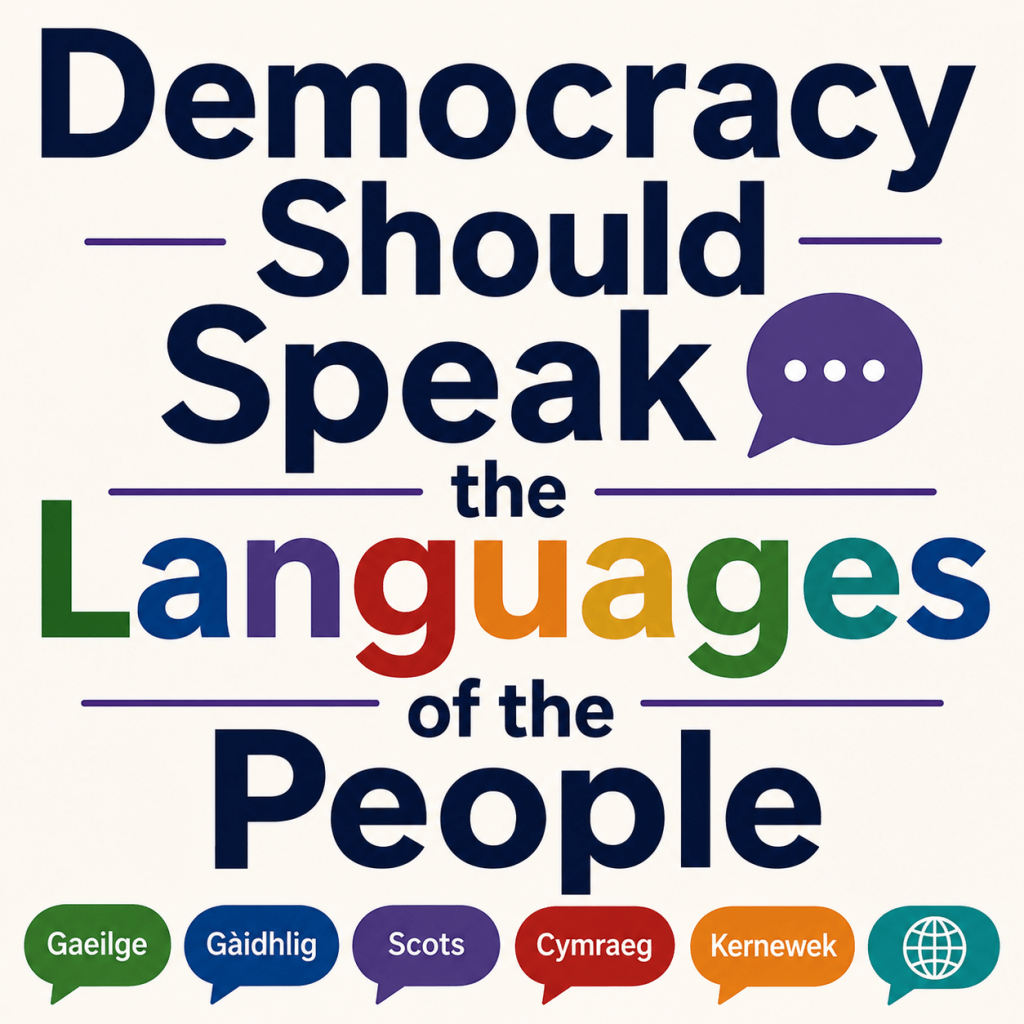
A Call to Parliament: Strength in Diversity
Restricting or criminalising multilingual election literature would send entirely the wrong message. It would suggest that linguistic diversity is something to be suppressed rather than respected. That is neither forward-looking nor consistent with the modern, inclusive society that the United Kingdom seeks to be.
Parliament should reject these and any similar amendments. Democracy is not weakened when more people can understand what political parties are saying. It is strengthened.
A mature democracy does not fear being heard in more than one language. It welcomes every opportunity for its citizens to participate, whatever language speaks most clearly to their hearts and minds.

