

Four familiar creatures from Britain’s natural world will replace historical figures on the next generation of Bank of England banknotes, following a public consultation that attracted nearly half a million responses.
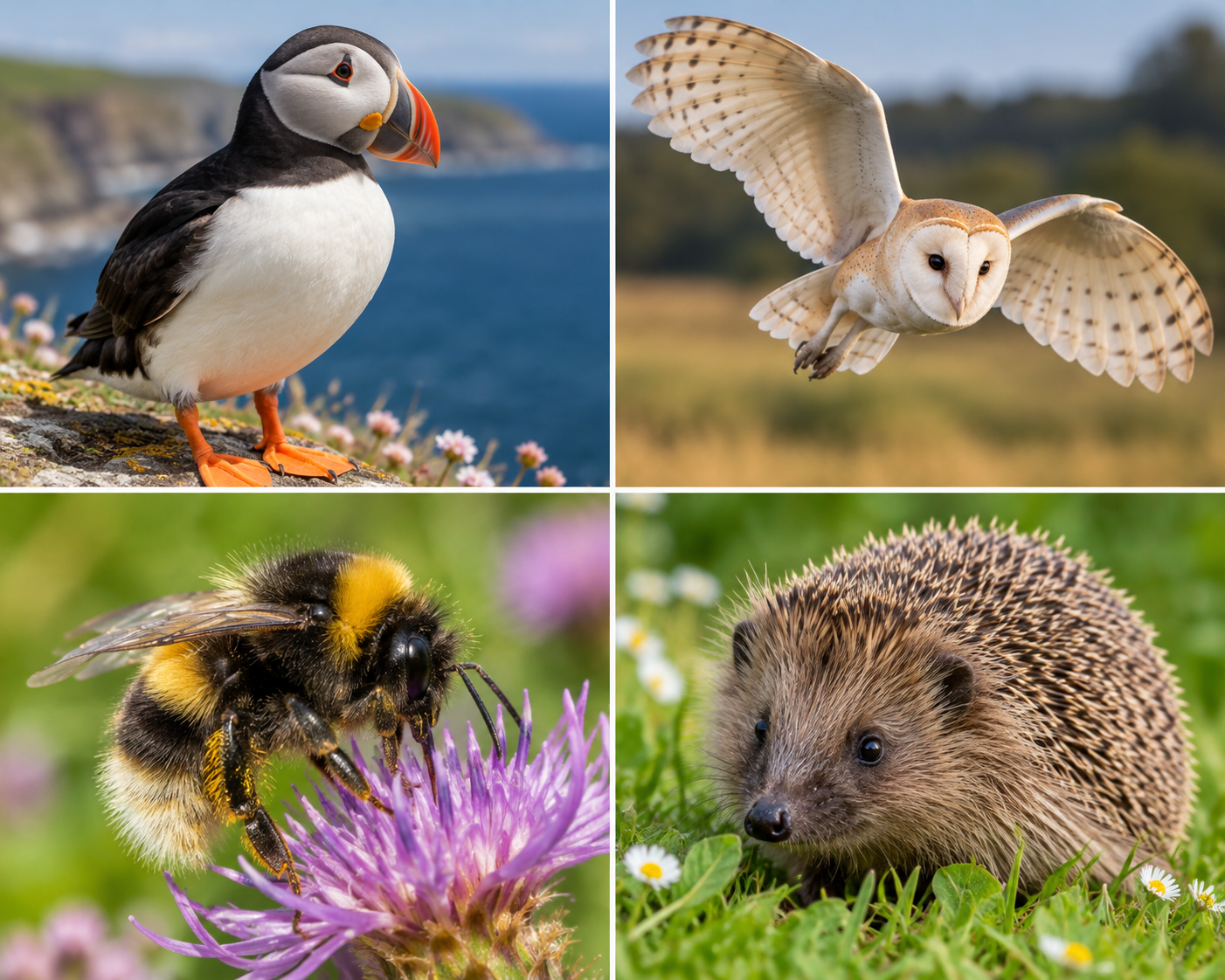
The Bank of England has announced that the Atlantic puffin, barn owl, buff-tailed bumblebee and European hedgehog will feature on the next series of £5, £10, £20 and £50 banknotes.
The announcement, made on Thursday 8 October 2026, marks a significant change in the appearance of British currency. Since 1970, Bank of England notes have featured prominent historical figures, but the next series will instead turn to wildlife found across the United Kingdom.
The decision follows one of the Bank’s largest public consultations on banknote design, with 478,531 people responding to a shortlist of 18 native animals.
Four animals chosen by the public
The selected animals represent different habitats and aspects of the natural environment:
- Atlantic puffin (Fratercula arctica) — a distinctive seabird associated with the British coastline and offshore islands.
- Barn owl (Tyto alba) — a familiar bird of farmland and open countryside, recognised by its heart-shaped face.
- Buff-tailed bumblebee (Bombus terrestris) — an important pollinator found in gardens, fields and other habitats.
- European hedgehog (Erinaceus europaeus) — one of Britain’s most recognisable small mammals, commonly associated with gardens and hedgerows.
The bumblebee received the most nominations, with 360,399 selections. The barn owl followed with 270,596, while the hedgehog received 259,665.
The Atlantic puffin attracted 183,137 selections. Although other birds received more nominations, the Bank selected the puffin as the most popular marine animal, ensuring coastal wildlife was also represented.
The consultation, which ran from 3 June to 3 July 2026, allowed participants to select animals from three groups: mammals; birds; and amphibians, insects and fish.
In total, respondents made more than 2.5 million selections.
A departure from historical portraits
The decision means the familiar historical figures on the reverse of the current banknotes will eventually leave circulation.
The present series features Winston Churchill on the £5 note, novelist Jane Austen on the £10, artist JMW Turner on the £20, and mathematician Alan Turing on the £50.
Their portraits reflect a tradition established in 1970, when the Bank began celebrating individuals who had contributed to British history, culture, science and public life.
The new wildlife designs represent a different approach to national identity, celebrating the natural environment rather than individual historical achievements.
The monarch’s portrait will remain on the banknotes, and the Bank has said it will continue to consider how to represent the United Kingdom’s different nations in its design.
The change has nevertheless drawn criticism from those who favour keeping historical figures on the currency.
Security as well as appearance
Although the wildlife theme represents a significant visual change, the Bank says the redesign is not simply a matter of decoration.
Modern banknotes must incorporate increasingly sophisticated security features to make counterfeiting more difficult.
Animals provide opportunities for distinctive imagery, including recognisable shapes and movements that can be incorporated into security elements.
The Bank also intends to include additional natural imagery alongside the four principal animals, potentially drawing on other species from the original shortlist.
Each denomination will feature a different animal, helping the public distinguish between the notes.
The Bank has not yet announced which animal will appear on each denomination.
Cash still matters
The announcement comes at a time when the use of physical cash has declined considerably, with electronic and contactless payments becoming increasingly common.
Nevertheless, the Bank of England maintains that cash remains an essential part of the payments system.
According to the Bank, cash remains the preferred payment method for about one in seven people, while the total value of banknotes in circulation reached £91.5 billion at the end of February 2026.
Victoria Cleland, the Bank’s Chief Cashier, welcomed the public engagement, saying the response demonstrated cash’s continuing importance.
The forthcoming series will also incorporate accessibility features intended to make the notes easier to recognise and use.
When will the new banknotes appear?
There will be no immediate change to the banknotes currently in circulation.
The Bank says designing, testing, and manufacturing a new series is a lengthy process involving scientific research, security development, accessibility testing, and detailed engraving.
The first denomination is expected to enter circulation over the next few years, although no precise launch date has been announced.
The final designs, including which animals will be allocated to each denomination, will be revealed closer to their introduction.
For now, the announcement offers an early glimpse of a new chapter in British currency’s appearance.
From the quiet flight of the barn owl to the colourful Atlantic puffin, the next generation of banknotes will carry images not of the people who shaped Britain’s past, but of the wildlife that forms part of its living landscape.
Source: Bank of England, Bank of England announces the four animals that will feature on our next series of banknotes, 8 October 2026.

