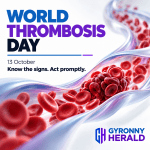
Knowing the warning signs and seeking prompt medical help can save lives.
Today, 13 October, is World Thrombosis Day: an opportunity to raise awareness of blood clots and the importance of recognising their symptoms.
A deep vein thrombosis (DVT) is a clot in a deep vein, usually in the leg. A clot that travels to the lungs can cause a pulmonary embolism (PE), which can be life-threatening.
Warning signs include:
- DVT: swelling or pain in one leg or calf, with warmth or redness.
- Pulmonary embolism: unexplained breathlessness, chest pain that may worsen when breathing in, coughing up blood or dizziness.
Some clots cause no obvious symptoms. Seek medical help immediately if you develop possible symptoms. If someone is struggling to breathe or has passed out, call 112 or 999.
Risk can increase during or after a hospital stay, with restricted movement, during pregnancy and after birth, or with cancer and its treatment. A previous blood clot also increases risk. Ask your healthcare team about your individual risk and follow their prevention advice.
World Thrombosis Day is a useful reminder to learn the signs, ask questions and act promptly when something feels wrong.

